How Boxer Crab Use Anemones as Living Weapons

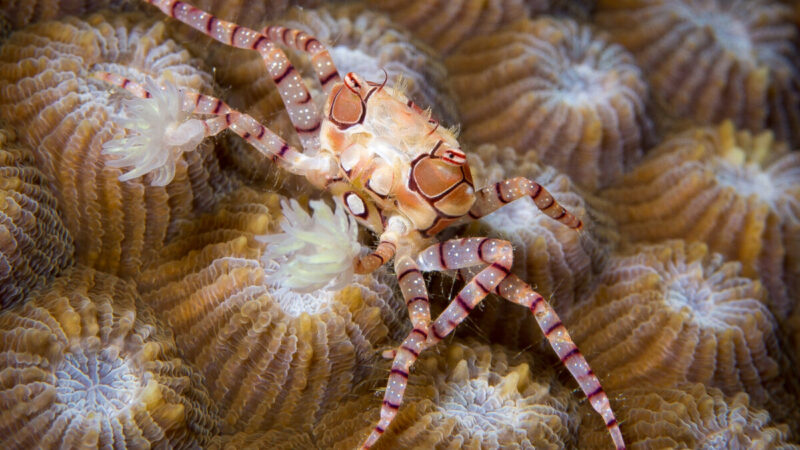
Imagine walking into battle holding two living, stinging gloves as your only defence. That’s exactly what the tiny boxer crab does, wielding sea anemones like biological boxing gloves to survive the wild waters of the reef.
Let’s dive into one of the most fascinating examples of animal behaviour and symbiosis in the marine world.
Meet the Boxer Crab
The boxer crab, belonging to the Lybia genus, is a small crustacean that’s become a favourite among underwater photographers and marine biologists alike. Found in warm Indo-Pacific waters, especially in reef environments, this crab measures only about 1-2 centimetres across. Despite its small size, it exhibits one of the most unique behaviours in the animal kingdom, carrying sea anemones in its claws.
Its name, “boxer crab,” is well-deserved. When threatened, it lifts its claws like a fighter raising its fists, each claw holding a tiny stinging anemone. The effect is both visually amusing and biologically practical, a natural defence that sets this crab apart from any other reef creature.
Read also: 10 Fascinating Facts About the Boxer Crab You Didn’t Know
The Symbiotic Relationship: Crabs and Anemones
The boxer crab’s behaviour isn’t just quirky, it’s a perfect example of mutualism, where two different species work together for mutual benefit. The crab grips a pair of sea anemones (usually of the Bunodeopsis genus) in its claws, waving them defensively at any predator or threat. But the relationship goes both ways.
- The crab gains a highly effective deterrent against predators, thanks to the anemone’s stinging tentacles.
- The anemone benefits from increased mobility, greater access to food particles, and a chance to avoid being buried or outcompeted on the crowded reef floor.
This living alliance highlights the brilliant ways marine creatures adapt to survive and makes for an unforgettable sight during night dives at destinations like Lembeh Resort in North Sulawesi, Indonesia.
Living Weapons: How Boxer Crabs Use Their Anemones
When danger approaches, the boxer crab springs into action by raising its claws and waving the anemones in a threatening manner. The movement mimics a boxer squaring up for a fight, which is how the crab got its common name. But it’s not just posturing, those little anemones are armed with stinging cells, known as nematocysts, capable of delivering painful zaps to curious fish or other would-be predators.
This defensive behaviour is both a visual and functional deterrent. In the complex and competitive ecosystem of a coral reef, size doesn’t always guarantee survival, but strategy does. By harnessing the power of another species, the boxer crab essentially turns its tiny body into a mobile, weaponised fortress.
Anemone Theft and Cloning: The Weird Gets Weirder
The crab-anemone relationship doesn’t stop at simple symbiosis, it’s full of surprises. One of the most fascinating discoveries about boxer crabs is their ability to clone their anemones. If a crab loses one or only finds a single anemone, it may tear it in half, allowing each half to regenerate into a fully formed anemone. This behaviour has been observed in both the wild and in aquarium environments, raising intriguing questions about crustacean intelligence and adaptation.
Even more dramatic is the act of anemone theft. Boxer crabs have been caught red-clawed in the act of stealing anemones from other crabs. These crustacean confrontations are short but intense, ending with one crab forcibly snatching a tentacled treasure from another. Lembeh Resort dive guides have documented this rare behaviour, thrilling divers with a glimpse into the crab’s tactical genius.
Evolutionary Ingenuity: Defence Through Cooperation
What makes the boxer crab so compelling is not just its behaviour, but what it represents in the broader story of evolution. Using another living creature as a tool or weapon is incredibly rare in the animal kingdom, especially among invertebrates. This behaviour blurs the line between instinct and problem-solving, suggesting an advanced form of evolutionary adaptation.
The crab-anemone partnership is a model of biological innovation, where survival isn’t based on brute strength, but on cooperation and creativity. While tool use has been documented in some octopuses and even certain insects, few invertebrates show such a consistent, species-wide reliance on another organism for protection.
Can You Keep Boxer Crabs in Aquariums?
While boxer crabs are occasionally available in the marine aquarium trade, they present a challenge for most hobbyists. These crabs are highly specialised in their behaviour and needs, and replicating their natural environment in a home tank isn’t easy.
- The anemones they use are small, fragile, and challenging to identify or sustain outside the wild.
- If the crab loses its anemones, it may suffer increased stress or become vulnerable.
- Ethically, removing these crabs from their habitat can harm delicate reef ecosystems.
For these reasons, responsible aquarists often avoid keeping boxer crabs unless they are part of a conservation-minded facility or advanced reef system that can replicate their natural behaviour.
Nature’s Most Unusual Tag Team
The boxer crab’s behaviour offers more than just a curious spectacle, it provides valuable insight into the ingenuity of evolution and the power of cooperation in nature. This tiny crab has mastered the art of self-defence not by building armour or growing larger claws, but by forging a relationship with another species.
Whether you’re a marine biologist, scuba diver, or just a curious reader, the boxer crab and its anemone allies remind us that the natural world still holds surprises. In an ocean filled with predators, this tiny crustacean survives by fighting smart, not hard.
FAQ: Boxer Crabs and Their Anemones
Q: Do all boxer crabs carry anemones?
Most boxer crabs do, though some have been spotted without. In such cases, they may be in the process of acquiring or cloning new ones.
Q: What species of anemones do boxer crabs use?
They typically use anemones from the Bunodeopsis genus, though identification can vary regionally.
Q: Can the anemones survive without the crab?
Yes, but they’re rarely found thriving independently, as they are small and easily displaced without the crab’s protection.
Comments are closed.